In this guide
Permanent vs. Seasonal, Side by Side
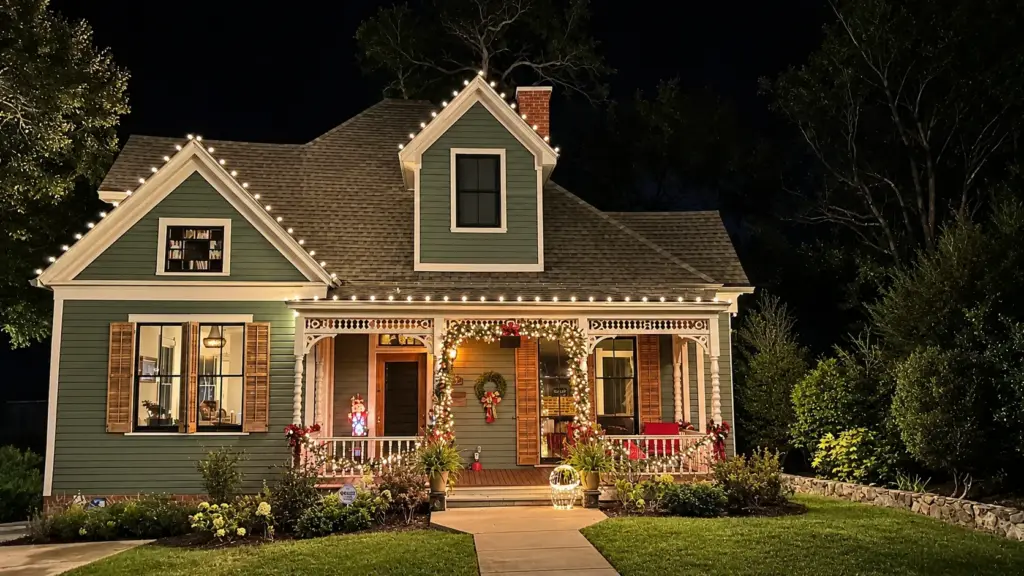
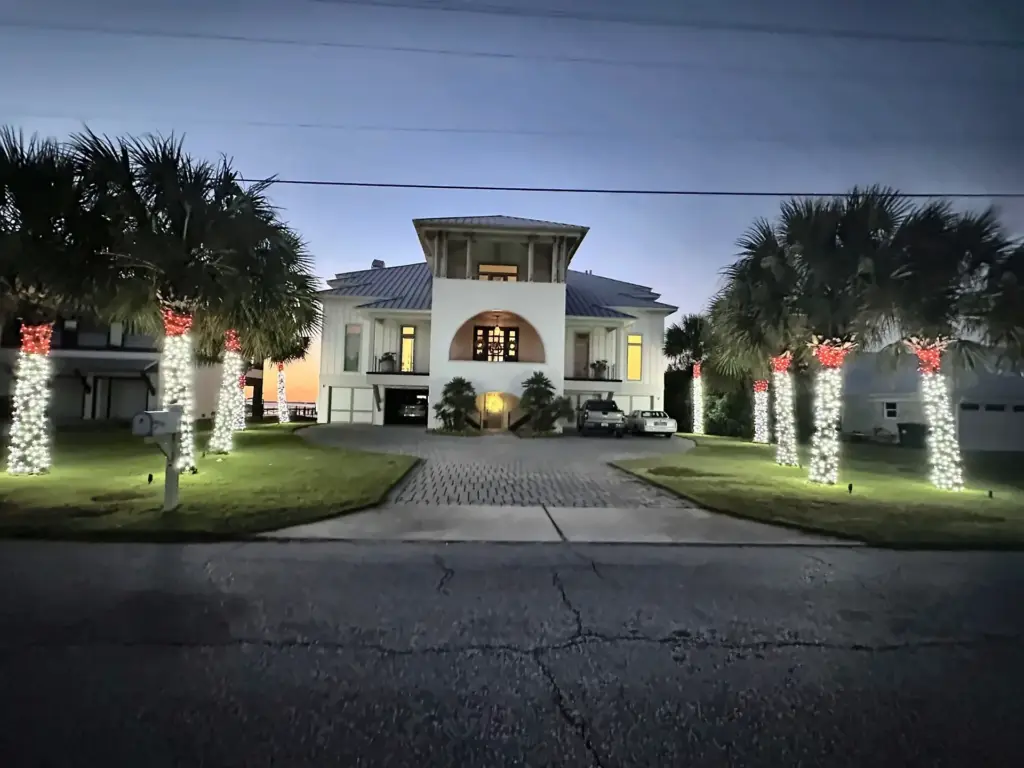
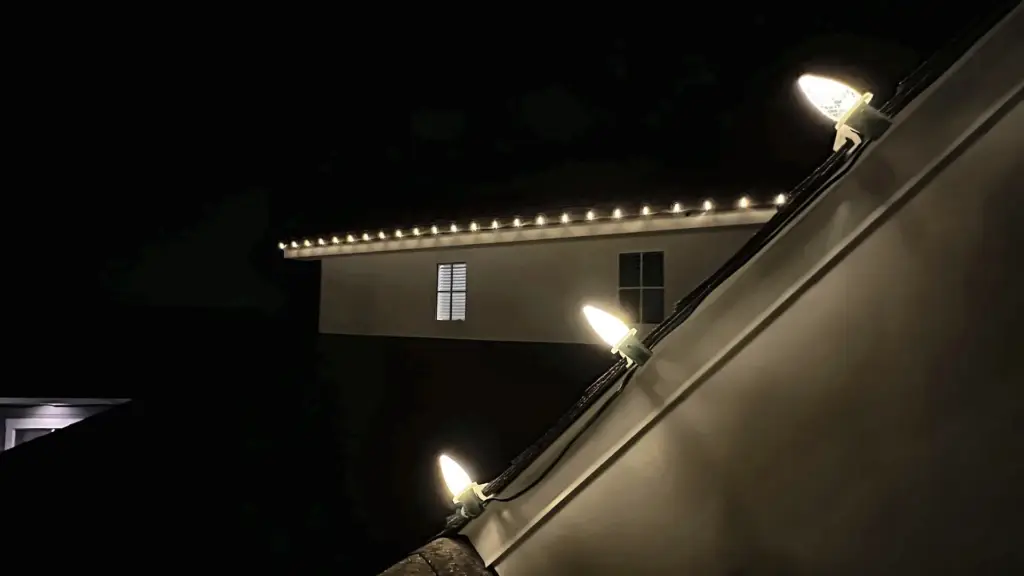
Seasonal lights go up in November and come down in January. Permanent lights mount once in a low track under your roofline and stay all year, controlled from your phone.
| Item | Seasonal (hired out) | Permanent |
|---|---|---|
| Up-front cost | None beyond the first season | $18 to $35 a foot installed |
| Yearly cost | $750 to $2,500 a season, locally | Electricity, plus repairs after the warranty |
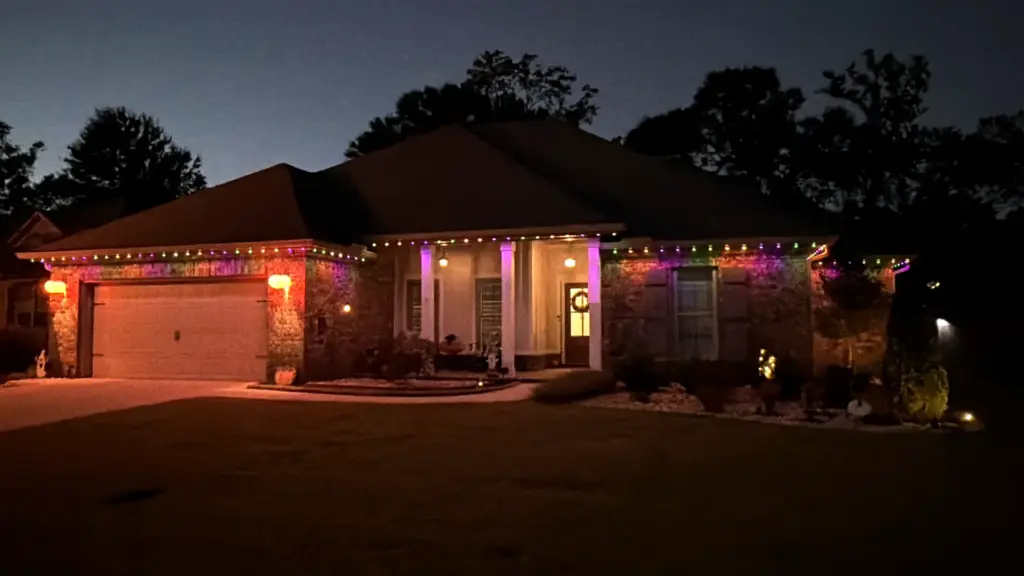
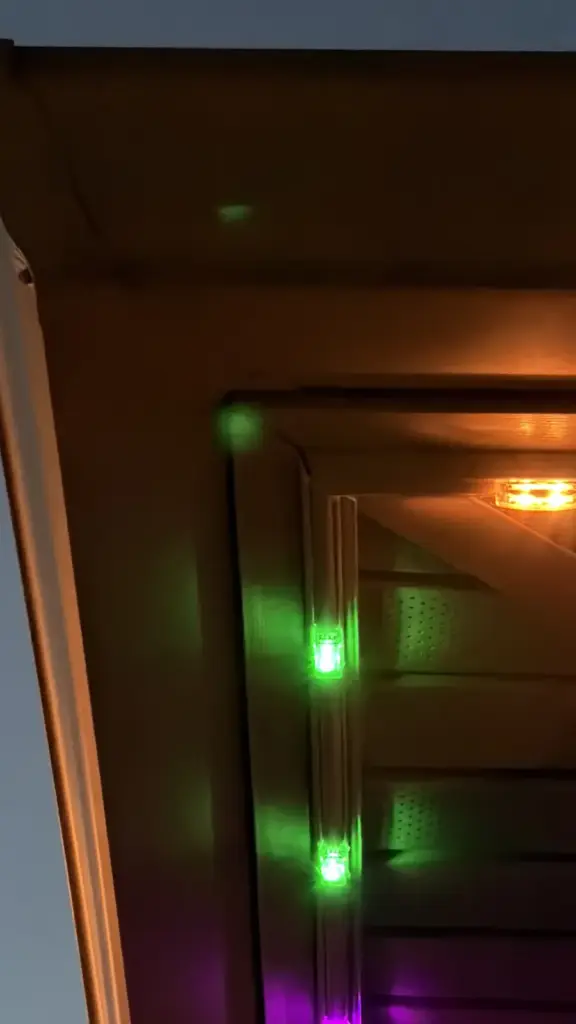
| Look | Classic C9 bulbs, the traditional Christmas look | Small LED points in a track; any color or pattern |
| Holidays covered | Christmas | Every holiday, game days and everyday trim lighting |
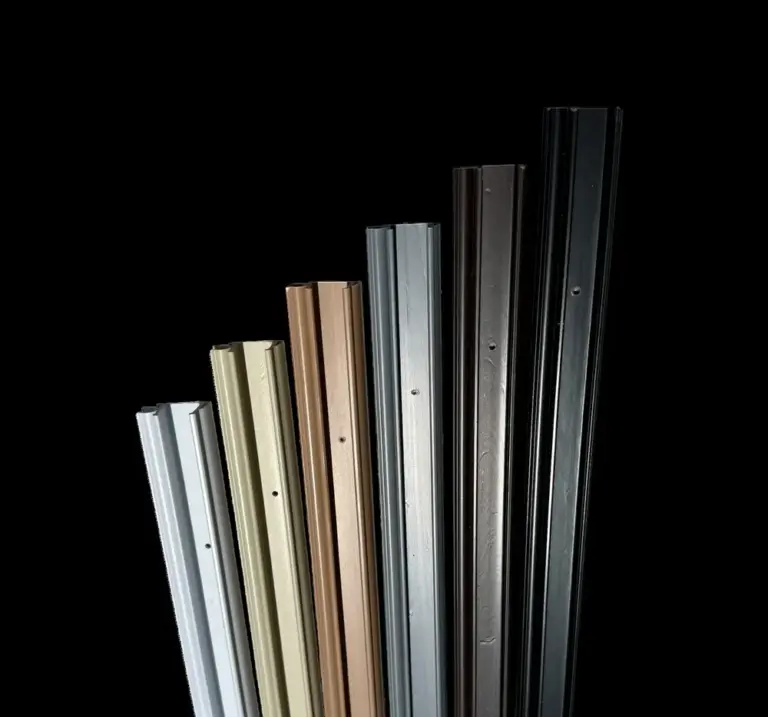
| In daylight | Nothing up for 10 months of the year | A thin track, color-matched to your trim |
| Storm season | Nothing on the house from February to October | On the house through hurricane season |
| HOA | Usually covered by holiday decoration rules | Usually reviewed as an exterior change |
| Who fixes it | The installer, during the season | The installer under warranty, then you |
What Each Costs Over Ten Years
The real question is how long until permanent lights cost less than paying for seasonal lights every year. Trimlight puts payback at 2 to 4 years. eufy says it can take well over a decade. The answer depends almost entirely on what you pay for seasonal lights now, so run your own numbers.
Break-Even Calculator
Set your roofline and what you'd pay each way. The chart shows the running total for each option.
Assumes seasonal prices stay flat and permanent lights need no paid repairs in ten years. Electricity is left out of both because LED costs are small either way. Per-foot prices from Trimlight ($18 to $35), Jellyfish ($25 to $35) and eufy ($20 to $40).
For Silent Lights’ own permanent and seasonal pricing, see our pricing page.
Hurricanes and Wind
This is the biggest difference between buying permanent lights here and buying them in Ohio. Seasonal lights are off the house all summer. Permanent lights ride out every storm.
- No brand publishes a wind rating. We checked Jellyfish, Oelo, Trimlight, Gemstone and Govee. Dealer claims that the track "stays secure" in storms aren't backed by a test or rating.
- Some warranties exclude storms outright. Oelo's warranty excludes damage from hurricanes, strong storms and winds over 70 mph.
- Mounting matters most. Good systems mount to the fascia or under the eaves, never on the gutter. Adhesive mounts are the weak point; Oelo calls stick-on DIY mounts prone to failure.
- Hurricane season runs June 1 to November 30. That is six months of every year your lights are on the house.
Does the warranty cover wind or storm damage? If not, does your homeowner's policy cover the lights as part of the house? Get both answers in writing.
Salt Air
Homes near the bay, the sound or the Gulf deal with salt spray that corrodes metal and wiring. Seasonal lights avoid most of it by spending ten months in storage. Permanent lights don't.
- Water ratings don't test salt. IP67 and IP68 ratings come from tests in fresh water. They tell you a light keeps water out, not that it resists corrosion.
- At least one warranty excludes it. Oelo excludes installs in a "corrosive environment" without defining the term. Ask any dealer whether a coastal home counts.
- Look for aluminum track and sealed connectors. Trimlight uses an aluminum channel it describes as corrosion-resistant. Commercial installers recommend gasketed connectors, stainless hardware and sealed wiring on the coast.
HOA Rules
Many neighborhoods between Pensacola and Orange Beach have an HOA, and permanent lights are where homeowners most often get caught.
- Permanent lights usually count as an exterior change. HOAs tend to review them like a new color of shutters, not like holiday decorations. Get approval before install.
- Florida law doesn't protect them. Florida Statute 720.3045 limits HOA rules only for items that can't be seen from the street, neighbors or common areas. Roofline lights can be seen.
- Expect rules on timing and brightness. Common HOA rules set display dates, turn-off times, and limits on flashing or strobe effects. Those apply to how you run permanent lights all year.
Submit the light and track specs, the track color, mounting method and a photo of a past install with your request. It speeds up approval.
Electricity
LEDs make power cost a minor line for both options. Trimlight bulbs use 0.6 to 0.9 watts each, so a 200-foot home draws about 120 to 400 watts. At Florida's average rate of about 16 cents per kilowatt-hour, running that 6 hours a night costs roughly $3.50 to $11.50 a month. A season of seasonal LED C9s costs a few dollars, which our cost guide works out.
Permanent Light Brands Compared
Most permanent systems are sold through dealers. Here is what each major brand publishes.
| Brand | Installed price | Warranty | Rated life | Gulf Coast notes |
|---|---|---|---|---|
| Jellyfish | $25 to $35/ft; typical $3,000 to $6,000 | 5 years parts, 1 year labor | Not stated | IP67, silicone-filled casings, pro install only |
| Oelo | Not published | 7 years through top dealers, 5 otherwise; labor year 1 only | 100,000 hours | IP68. Excludes hurricanes, winds over 70 mph and corrosive environments |
| Trimlight | $18 to $35/ft | Lifetime parts, at least 1 year labor | 50,000 hours | Aluminum channel, mounted under eaves, never on gutters |
| Gemstone | Not published | Lifetime lights, 10 years other parts | 50,000 hours | Terms from a competitor's comparison; register within 30 days |
| Govee (DIY) | $280 to $800 a kit | 3 years | 50,000 hours | IP67 or IP68. Adhesive and clip mounts; you install it |
From each brand's website, checked October 2026. Silent Lights installs Asahom and Minleon systems; see our permanent lighting page for those terms.
Which One Fits Your Home?
Answer four quick questions for a starting point.
Permanent or Seasonal?
Frequently Asked Questions
How much do permanent Christmas lights cost?
Most installed systems cost $18 to $35 a foot. A typical home front runs about $3,000 to $6,000, and Jellyfish reports an average of about $4,600. DIY kits like Govee run $280 to $800.
Are permanent Christmas lights worth it?
They are worth it if you'll stay in the home long enough to pass break-even and you want lights for more than Christmas. On a 150-foot roofline, permanent lights usually match the cost of hiring seasonal lights in about 3 to 6 years.
Can permanent lights survive a hurricane?
No brand publishes a wind rating, and Oelo's warranty excludes hurricanes and winds over 70 mph. Systems mounted under the eaves with screws hold up better than adhesive mounts, but ask whether the warranty or your homeowner's policy covers storm damage.
Do permanent lights hold up to salt air?
IP67 and IP68 water ratings are tested in fresh water and don't measure corrosion. Look for aluminum track and sealed connectors, and ask whether the warranty excludes coastal or corrosive environments.
Do I need HOA approval for permanent lights?
Usually, yes. HOAs tend to treat permanent lights as an exterior modification, and Florida law does not protect visible roofline lights from HOA rules.
Can you see permanent lights during the day?
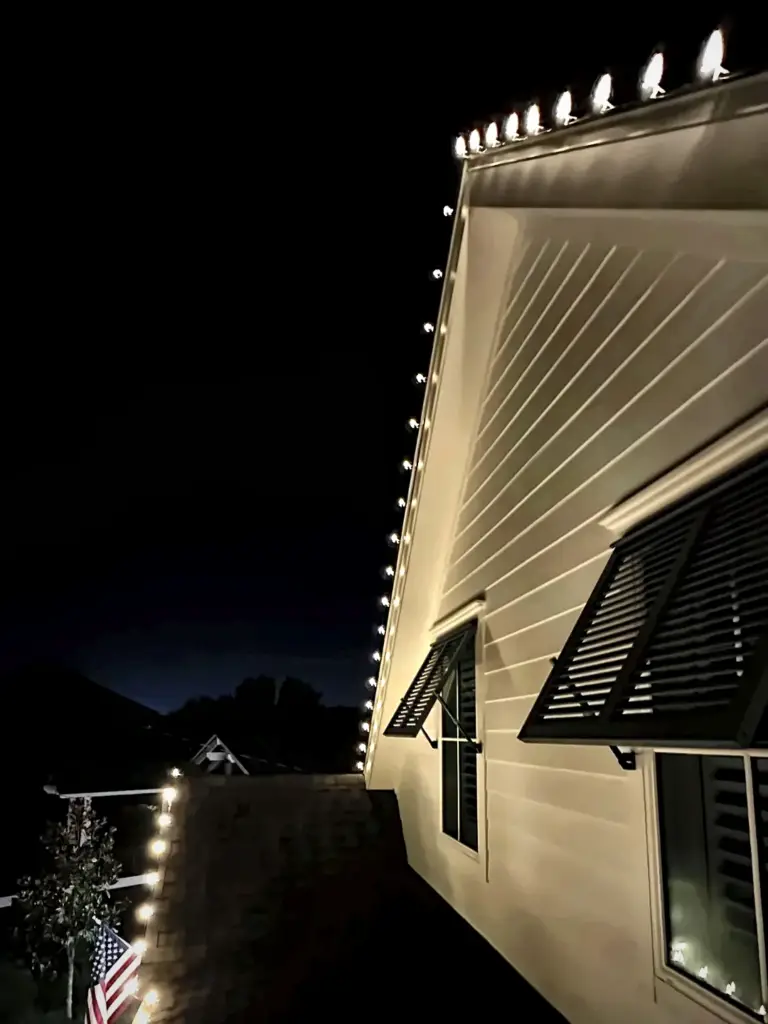
You see a thin track along the roofline. Installers color-match it to your trim so it blends in from the street.
See Both Options on Your Home
Send a photo or your address. We'll text back a picture of your home lit both ways, with a price for each. Free, with no obligation to book. Or see everything included with our Christmas light installation in Pensacola.
Sources
- Jellyfish Lighting, permanent light cost and product details
- Oelo, warranty and 2025 residential brochure
- Trimlight, 2026 pricing breakdown, gutter mounting and power use
- Trimlight vs. Gemstone comparison (Gemstone terms)
- Govee, Permanent Outdoor Lights and Oelo on adhesive mounts
- eufy, permanent Christmas lights cost
- HomeAdvisor, Cost to Install Holiday Lighting
- Creative Displays, holiday lighting in coastal cities
- Florida Statutes 720.3045
- Associa, HOA holiday decoration rules and Trimlight on HOA approval
- EnergySage, Florida electricity cost
- NOAA National Hurricane Center
Brand terms change. We review this guide each fall and note the date at the top.